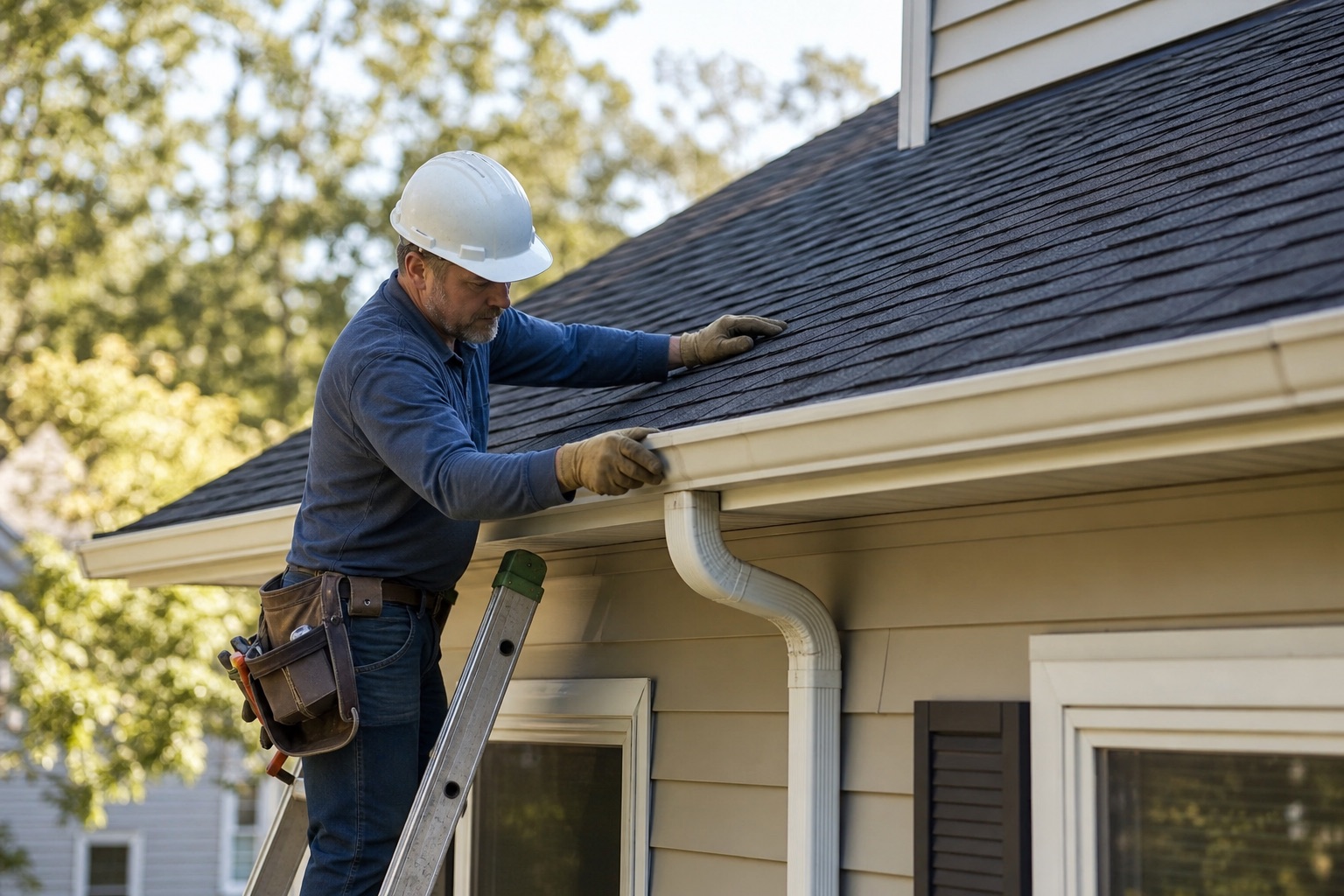
Keep the inspection on the ground
Homeowners can spot many warning signs without climbing a ladder. Use binoculars from several angles and inspect the attic only where access is safe. Wet roofs, steep slopes and brittle materials are jobs for trained professionals with proper fall protection.
Exterior signs
- Shingles that are missing, lifted or visibly cracked
- Dark streaks paired with damaged or aging material
- Flashing that has pulled away from a chimney or wall
- Gutters collecting an unusual quantity of granules
Granule loss alone does not prove a roof has failed, especially after installation, but increasing loss on an older roof is useful evidence to document. Take dated photos from the same locations after major storms.
Interior signs
Brown ceiling rings, peeling paint near roof lines, damp attic insulation and daylight visible through decking deserve prompt attention. The visible stain may be far from the entry point because water can travel along rafters and sheathing.
Questions for a roofing estimate
Ask whether the proposal includes underlayment, flashing, ventilation work, decking allowances, permits, cleanup and magnetic nail sweeping. Confirm how unexpected damaged decking is priced and approved.