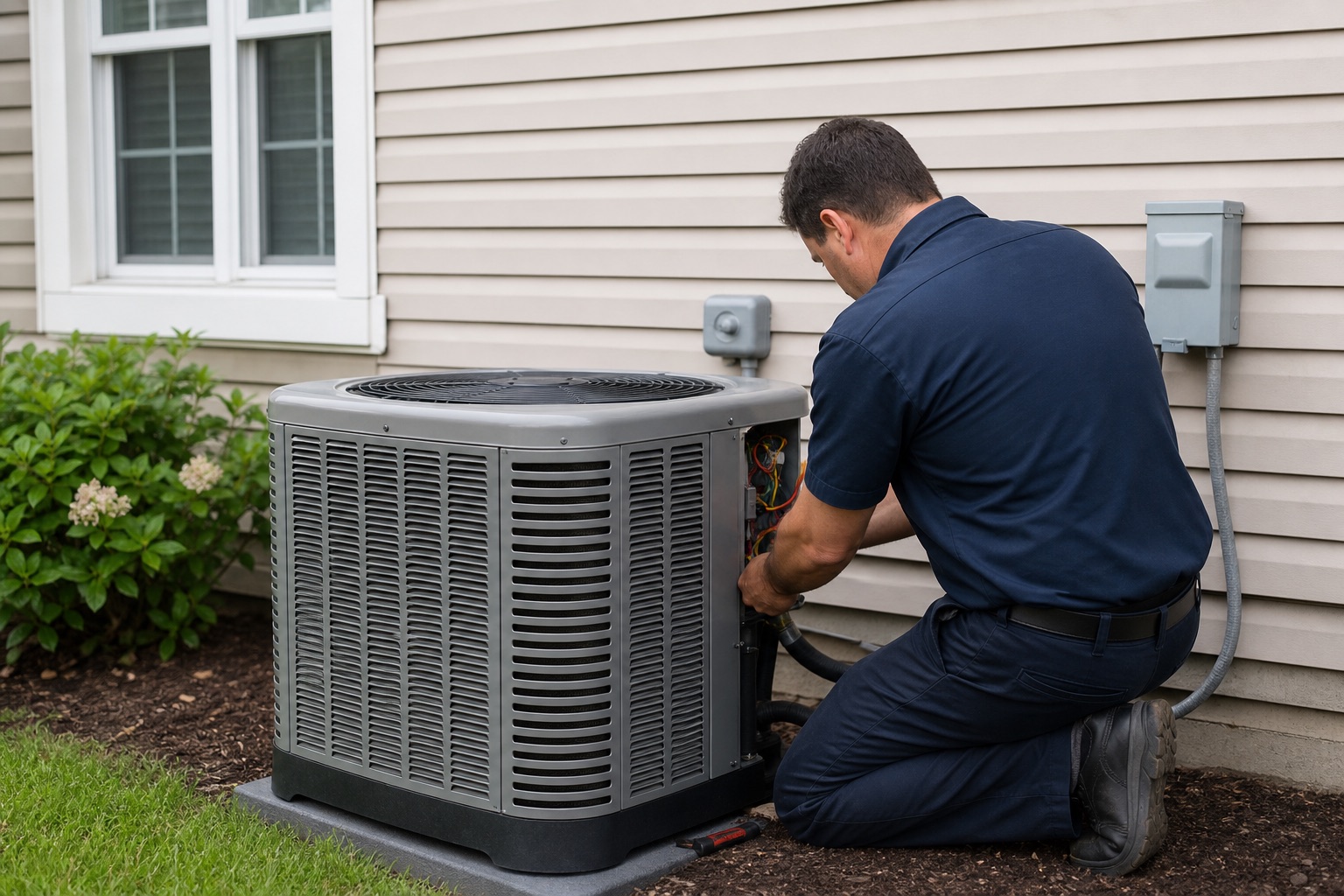
Begin with safety and diagnosis
If you smell gas, see smoke, hear electrical arcing or a carbon-monoxide alarm sounds, leave the area and contact the appropriate emergency service or utility. For ordinary performance problems, start with a licensed professional’s diagnosis rather than a replacement quote alone.
Ask for the failed component, the measured readings that support the diagnosis and the expected effect of the repair. A weak capacitor and a failed compressor are very different decisions.
Age is context, not a verdict
Many systems run for well over a decade, but climate, installation quality and maintenance history affect useful life. An older unit with a small, isolated repair may still be reasonable to keep. Repeated refrigerant leaks, unavailable parts or a failing major component can make replacement more practical.
Compare complete proposals
A replacement estimate should identify equipment model numbers, efficiency ratings, labor, permits, disposal, controls, warranty terms and any duct or electrical work. The lowest equipment price can become the highest final bill if important scope is omitted.
- Confirm load calculations rather than relying only on the old unit size
- Ask who registers the manufacturer warranty
- Request payment schedule and change-order terms in writing
- Verify contractor license and insurance where applicable
Consider comfort and operating cost carefully
Higher efficiency can reduce energy use, but savings depend on weather, utility rates, duct condition and how the home is used. Be cautious with precise payback promises that do not show assumptions. Comfort improvements may come from air sealing or duct repairs rather than a larger unit.